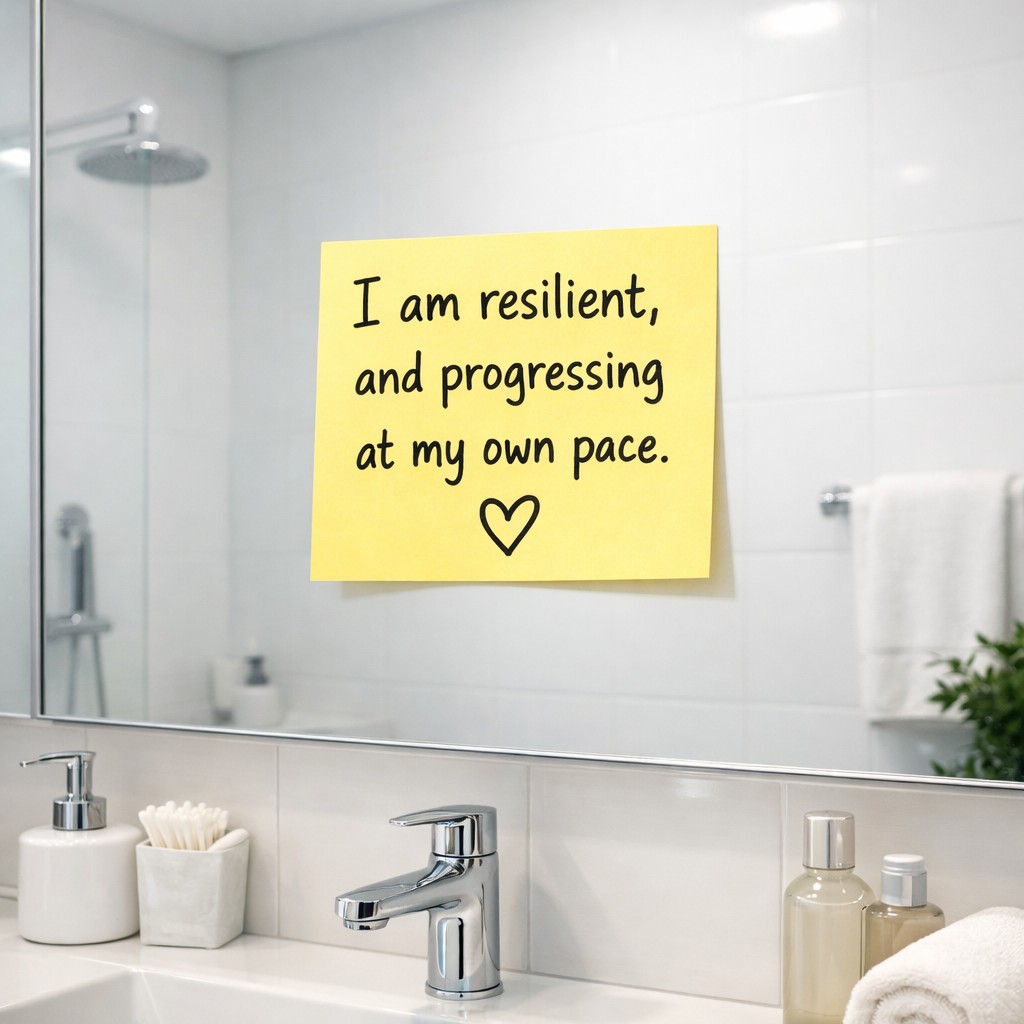
As the year comes to a close, many people naturally begin to reflect. Some feel proud of how far they’ve come, while others focus on what didn’t go as planned. Setbacks tend to feel heavier during this time, especially when expectations were high.
Affirmations are often misunderstood as a way to ignore disappointment or “stay positive” no matter what. In reality, affirmations don’t erase setbacks, and they aren’t meant to. What they do is help shape how we respond when things don’t go the way we hoped.
After a setback, the mind often turns inward with harsh self-talk. Thoughts like “I should be further along” or “I always mess this up” can quickly turn a single moment into a reason to quit entirely. Affirmations help interrupt that spiral.
Instead of denying what happened, affirmations create space for a healthier response. Statements such as “One setback doesn’t define my progress” or “I can choose how I continue from here” support emotional regulation and self-compassion.
This shift matters because how we speak to ourselves after a setback often determines what comes next. When self-talk becomes punishing, motivation tends to disappear. When it becomes supportive, continuing feels possible again , even if the pace is slower than expected.
Affirmations don’t ask you to pretend everything is fine. They help you stay grounded in moments that feel discouraging. Over time, this practice builds resilience not by avoiding difficulty, but by meeting it with steadier self-talk.
As the year ends, it’s okay to acknowledge what didn’t happen. It’s also okay to choose words that allow you to move forward without shame. Setbacks are part of growth, and affirmations help ensure they don’t become the end of the story.
If you’re navigating disappointment or reflection right now, using gentle affirmations can help stabilize your mindset. You can explore our affirmation generator on willfullycrafted.net to find supportive self-talk for moments when continuing feels difficult.