Author: Willfullycrafted

  • Affirmations Don’t Erase Setbacks…They Help You Respond to Them

    Affirmations Don’t Erase Setbacks…They Help You Respond to Them

    As the year comes to a close, many people naturally begin to reflect. Some feel proud of how far they’ve come, while others focus on what didn’t go as planned. Setbacks tend to feel heavier during this time, especially when expectations were high.

    Affirmations are often misunderstood as a way to ignore disappointment or “stay positive” no matter what. In reality, affirmations don’t erase setbacks, and they aren’t meant to. What they do is help shape how we respond when things don’t go the way we hoped.

    After a setback, the mind often turns inward with harsh self-talk. Thoughts like “I should be further along” or “I always mess this up” can quickly turn a single moment into a reason to quit entirely. Affirmations help interrupt that spiral.

    Instead of denying what happened, affirmations create space for a healthier response. Statements such as “One setback doesn’t define my progress” or “I can choose how I continue from here” support emotional regulation and self-compassion.

    This shift matters because how we speak to ourselves after a setback often determines what comes next. When self-talk becomes punishing, motivation tends to disappear. When it becomes supportive, continuing feels possible again , even if the pace is slower than expected.

    Affirmations don’t ask you to pretend everything is fine. They help you stay grounded in moments that feel discouraging. Over time, this practice builds resilience not by avoiding difficulty, but by meeting it with steadier self-talk.

    As the year ends, it’s okay to acknowledge what didn’t happen. It’s also okay to choose words that allow you to move forward without shame. Setbacks are part of growth, and affirmations help ensure they don’t become the end of the story.

    If you’re navigating disappointment or reflection right now, using gentle affirmations can help stabilize your mindset. You can explore our affirmation generator on willfullycrafted.net to find supportive self-talk for moments when continuing feels difficult.

  • How Affirmations Support Action When Working Toward Your Goals

    How Affirmations Support Action When Working Toward Your Goals

    Affirmations are often misunderstood. Some people expect them to magically create results, while others dismiss them entirely. The truth sits somewhere in between. Affirmations are not a substitute for action , but they can play a powerful role in supporting it.

    When working toward goals, motivation naturally rises and falls. This is normal. What often determines whether someone continues or quits is not ability, but mindset. This is where affirmations help.

    Affirmations influence the internal dialogue that runs alongside effort. When challenges appear, negative self-talk can quietly undo progress by encouraging doubt, frustration, or avoidance. Supportive self-talk, on the other hand, helps people stay engaged with their goals even when results aren’t immediate.

    Affirmations work by reinforcing identity rather than outcomes. Statements like “I am someone who follows through” or “I continue showing up even when it’s uncomfortable” don’t remove obstacles — they strengthen the mindset needed to face them.

    This mental reinforcement makes action feel more sustainable. Instead of relying on bursts of motivation, affirmations help build consistency. Over time, consistency becomes habit, and habit supports long-term progress.

    It’s important to be clear: affirmations alone don’t create change. Action still matters. Effort still matters. But affirmations can reduce the mental resistance that often prevents people from taking action in the first place.

    When used alongside realistic goals and daily effort, affirmations help keep the inner environment supportive rather than discouraging. They don’t do the work for you ,they help you stay connected to the reason you’re doing it.

    Affirmations aren’t about wishing for results. They’re about strengthening the mindset that allows action to continue when motivation fades.

    If you’d like support strengthening your mindset while working toward your goals, you can explore our affirmation generator to find positive self-talk that fits your daily routine.

  • How Positive Self-Talk Turns Short-Term Goals Into Lasting Habits

    How Positive Self-Talk Turns Short-Term Goals Into Lasting Habits

    As the new year approaches, many people begin thinking about change. Fresh starts feel motivating, and goals feel exciting at first. But motivation alone is rarely enough to carry us through long-term growth.

    This is where positive self-talk and mindset work make a lasting difference.

    Motivation is temporary. It often fades weeks after goals are set, especially when progress feels slow or life becomes busy. Positive self-talk, on the other hand, creates an internal environment that supports consistency even when motivation runs low.

    When you intentionally shift the way you speak to yourself, you begin reinforcing the mental foundation needed for habits to form. Instead of relying on excitement, you rely on belief, patience, and self-trust.

    For example, many people set health-related goals at the start of the year. Without supportive self-talk, early setbacks can quickly lead to frustration and quitting. With affirmations, those same moments are met with understanding and persistence instead of self-criticism.

    Affirmations help reframe the process from short-term effort to long-term lifestyle change. Statements such as “I am building habits that support my well-being” or “I stay consistent even when progress feels slow” reinforce commitment beyond the initial burst of motivation.

    Over time, this internal dialogue becomes automatic. When challenges arise, the mind is already conditioned to respond with encouragement rather than doubt. This is what transforms goals into sustainable routines.

    The new year isn’t just a chance to set goals, it’s an opportunity to change the way you speak to yourself while pursuing them. When positive self-talk becomes part of the process, success becomes something you grow into, not something you chase.

    Positive self-talk doesn’t need to be complicated. Sometimes having the right words in front of you is enough to keep going when motivation fades. If you’d like gentle affirmations you can return to daily, you can visit our affirmation generator here.

  • Small Ways to Incorporate Affirmations Without Disrupting Your Daily Routine

    Small Ways to Incorporate Affirmations Without Disrupting Your Daily Routine

    Many people want to use affirmations but worry they don’t have the time or that it will feel forced. The truth is, affirmations don’t need to interrupt your day to be effective. When used gently and consistently, they can blend naturally into routines you already have.

    One simple way to incorporate affirmations is during moments that already exist. While brushing your teeth, washing your hands, or waiting for your coffee to brew, silently repeat a short supportive statement. These moments are often overlooked, yet they provide perfect opportunities for positive self-talk.

    Another easy method is pairing affirmations with daily habits. For example, reading one affirmation before opening your phone in the morning or repeating a calming phrase while getting dressed. This helps create a mental association between routine actions and supportive thoughts.

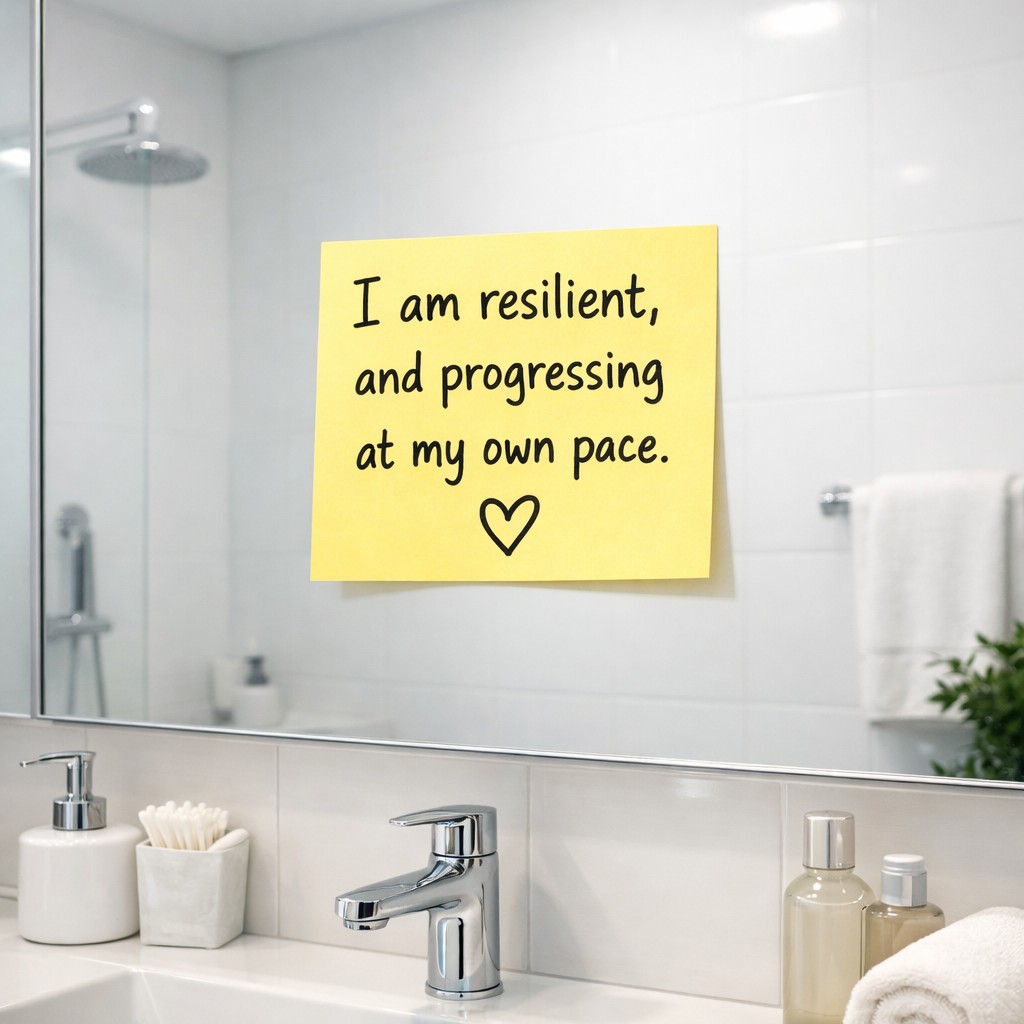
    Written affirmations can also be subtle. Placing a small note on a mirror, planner, or desk allows your mind to absorb positive language without effort. You don’t need to stop what you’re doing, simply seeing the words can influence your mindset over time.

    Affirmations can even be woven into internal dialogue. When a negative thought appears, gently reframe it. Instead of forcing positivity, choose a neutral and supportive statement such as “I’m doing the best I can today” or “I’m learning as I go.”

    The most important factor is consistency, not intensity. Small affirmations practiced daily are more effective than long sessions done occasionally. Over time, these quiet moments of encouragement begin to shape how you respond to challenges and stress.

    Affirmations don’t need to change your schedule, but change the language you use within it.

    Want a new affirmation use an affirmation generator at willfullycrafted.net for new inspiration today!

  • How to Combat Negative Words From Others Using Affirmations

    How to Combat Negative Words From Others Using Affirmations

    Words have power. When spoken repeatedly, especially by people close to us, those negative words can slowly shape how we see ourselves, even when we know they aren’t true. Learning how to protect your mindset is essential for emotional well-being.

    Negative words from others often linger because the mind is wired to remember criticism more strongly than praise. Over time, these words can turn into internal dialogue, replaying long after the conversation has ended. This is where affirmations become a powerful tool.

    Affirmations help interrupt negative messaging by replacing it with intentional, supportive language. Instead of allowing harmful words to take root, affirmations give your mind a new script to follow. They act as a counterbalance, gently reminding you of your worth, strength, and identity.

    When faced with criticism or harsh words, the goal isn’t to argue with the person internally. The goal is to re-anchor yourself. Simple affirmations such as “I define my own worth” or “Other people’s words do not determine who I am” can help restore emotional balance.

    Consistency is key. Repeating affirmations daily strengthens your ability to emotionally detach from negativity. Over time, the brain becomes less reactive to external criticism and more grounded in self-trust.

    Affirmations also create emotional boundaries. They don’t deny that words were said, they prevent those words from becoming beliefs. This allows you to move through the world with confidence, even when others project their own struggles onto you.

    You cannot control what others say, but you can control what you allow to stay. Choosing affirmations is choosing to protect your inner voice.

    Need help with the words for you affirmation? Check out the affirmation generators on willfullycrafted.net.

  • The Science Behind Why Repeating Positive Words Works

    The Science Behind Why Repeating Positive Words Works

    Most people think affirmations are just “nice sentences,” but modern neuroscience shows something much deeper is happening.
    Every repeated thought, good or bad, strengthens real pathways in the brain.
    This is why the things we say to ourselves eventually shape how we feel, act, and respond to life.

    When you speak or think the same positive words on a regular basis, your brain begins treating them as patterns.
    And the more consistent the pattern, the stronger and easier it becomes for your mind to return to it automatically

    🧠 Why Repetition Changes the Brain

    Inside your brain are trillions of neural connections.
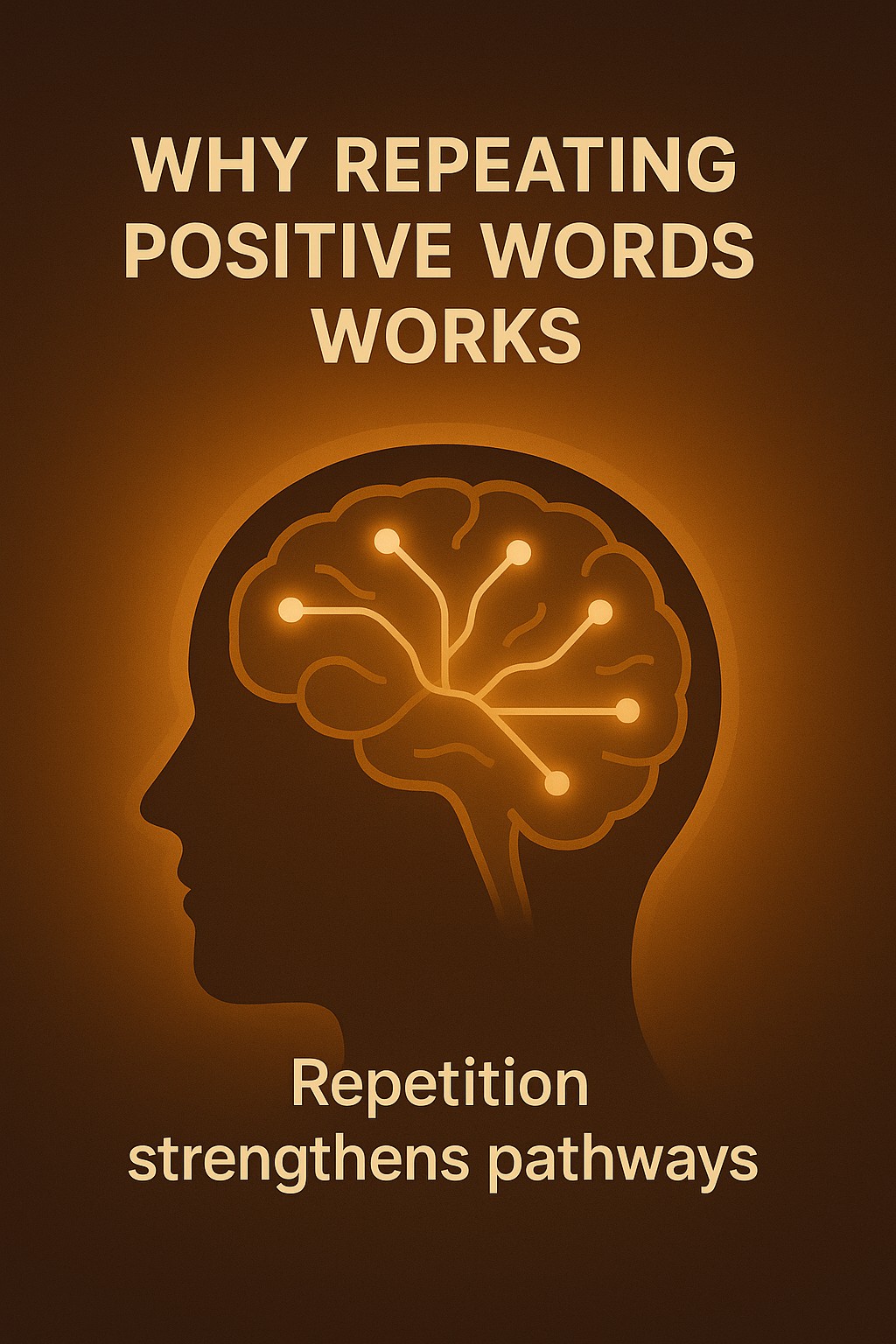
    When a thought is repeated, the connection between the neurons that carry that thought becomes stronger.
    This process is called long term potentiation, the foundation of memory, habit, and belief formation.

    Think of it like a walking trail:

    • The more you walk it, the clearer and easier the path becomes.
    • The less you walk it, the more it grows over.

    Affirmations work the same way. With repetition, the path strengthens, and the belief becomes easier for your brain to access.

    This is why repeating helpful statements even when they don’t feel “true” yet, gradually shifts your emotional baseline and the way you experience your life.

    🌱 Why Rituals Make Affirmations More Effective

    Repeating words alone helps, but repeating them in the same emotional or physical context supercharges their effect.

    This is because your brain forms associations:

    • A place
    • A sound
    • A specific action
    • A certain time of day

    When you pair an affirmation with a repeated ritual, the brain begins linking the two.
    Eventually, the ritual itself triggers the emotional state you want.

    This is why things like journaling, mirror work, meditation, and morning routines are so powerful. They provide a familiar emotional “container” that helps the affirmation take root faster.

    🔁 How to Practice Daily Repetition (That Actually Works)

    Consistency matters more than perfection. Here are simple, science-backed ways to make repetition feel natural and doable.

    1. The “One Line a Day” Method

    Pick one affirmation for the day and repeat it slowly 3–5 times throughout the morning.
    Say it out loud, write it once, and think it once throughout the day.
    This layered repetition helps the brain store it in multiple places: visual, verbal, emotional.


    2. Morning Anchor Ritual (Use Your Phone Alarm)

    Most people reach for their phone the moment they wake up, which makes it the perfect built-in repetition tool.

    Here’s how to turn your alarm screen into your daily affirmation ritual:

    1. Choose one affirmation for the week, such as:
      • “Today, I choose calm.”
      • “Good things are coming to me.”
      • “I am becoming stronger every day.”
    2. Set it as the label for your phone alarm.
      This makes the affirmation the first message your brain sees each morning.
    3. When the alarm goes off:
      • Pause for 3 seconds
      • Read the affirmation slowly
      • Take one deep breath
      • Then turn off the alarm

    This works because your brain is in a relaxed alpha state when you wake up, the most receptive state for forming new beliefs.

    Doing this daily creates a strong mental association:
    Wake up → affirmation → calm focus.
    Over time, this becomes automatic.

    3. Evening Wind-Down Repetition

    Before bed, repeat the same affirmation you used in the morning.
    Your mind processes memories and emotions during sleep, so adding a positive message before rest helps reinforce the neural pathway.

    Even 20 seconds is enough the key is the pattern, not the length.

    4. Use “Trigger Words” Throughout the Day

    Choose a small phrase that instantly reconnects you to your affirmation.
    Examples:

    • “Breathe.”
    • “I soften here.”
    • “Move gently.”
    • “I can handle this.”

    Repeat your trigger any time you feel stressed, overwhelmed, or off-center.
    This builds a micro-habit loop that your brain begins to rely on.

    5. Mirror Ritual (Why This One Works So Fast)

    Mirror work is powerful because seeing your own reflection activates emotional processing centers in the brain.
    When you speak affirmations into the mirror, your brain treats them as self-directed truths, not just words.

    Start with one sentence like:

    • “I am becoming someone I’m proud of.”

    Say it slowly and maintain eye contact for 3 seconds.
    That moment of connection makes the repetition far more impactful.

    ✨ Final Thought

    Repetition isn’t about forcing yourself to believe something.
    It’s about gently teaching your brain a new pathway, one word, one ritual, one morning at a time.

    When you pair affirmations with consistent rituals, you’re not just saying positive things…
    You’re rewiring your inner world.

    Struggling to figure out your own affirmations? Try the free affirmation generator at willfullycrafted.net.

  • ⭐ The Science Behind Why Repeating Positive Words Works

    ⭐ The Science Behind Why Repeating Positive Words Works

    How simple phrases reshape your brain, emotions, and daily experiences

    Many people use affirmations because they feel good, but science shows there is much more happening beneath the surface. Repeating positive words isn’t “wishful thinking.” It’s a measurable process that influences your brain’s wiring, stress response, focus, and beliefs.

    Below is the real science behind why daily affirmations can help you think clearer, feel stronger, and approach life with more confidence.

    🧠 1. Positive Words Activate the Brain’s Reward Center

    A study published in Social Cognitive and Affective Neuroscience (Falk et al., 2015) found that self-affirmation activates regions of the brain involved in reward processing, specifically the ventral striatum and ventromedial prefrontal cortex.

    This means:

    • Your brain reacts to affirmations similarly to how it reacts to small rewards.
    • Repeating positive statements reinforces motivation and resilience.
    • You become more open to learning, change, and healthier habits.

    Simply put: your brain likes when you speak kindly to yourself.

    🧠 2. Self-Talk Reduces Stress and Protects Your Nervous System

    A 2013 study from The Journal of Sports and Exercise Psychology found that positive self-talk reduces anxiety and improves emotional control.

    Other studies show:

    • Stress hormones decrease when you use supportive inner language
    • Cognitive performance improves
    • You recover from setbacks more quickly

    Affirmations help your nervous system shift from fight-or-flight into a calmer, more regulated state.

    This is why saying something like

    “I can handle this moment”
    often brings real physical relief.

    🧠 3. Repetition Shapes Neural Pathways (Neuroplasticity)

    Neuroscientists agree: what you repeat, you reinforce.

    Your brain forms pathways based on frequent thoughts, not necessarily true thoughts.

    This is called neuroplasticity, and it’s the reason:

    • Negative thoughts create deeper negative patterns
    • Positive thoughts can create healthier emotional reflexes

    A 2016 review in Nature Reviews Neuroscience explains that repeated mental experiences including inner dialogue, literally rewire how brain cells connect.

    So when you repeat the same supportive sentence daily, your brain begins to treat it as familiar, expected, and believable.

    Over time, this becomes your default mindset instead of forced positivity.

    🧠 4. Affirmations Strengthen Your Sense of Self

    Research from Carnegie Mellon University found that affirmations improve your ability to handle difficult situations by reinforcing your identity and values.

    When you say:

    • “I am capable.”
    • “I am worthy.”
    • “I am learning.”

    …you’re not just saying words, you are strengthening your inner foundation, which makes real world challenges feel less threatening.

    🧠 5. Positive Self-Talk Improves Performance Across Many Areas

    Studies across sports, medicine, and education show that affirmations and self-talk can:

    • Improve problem-solving
    • Reduce anxiety before tasks
    • Increase persistence
    • Increase physical performance
    • Support mental focus

    This works because positive language influences both emotion and attention, the two systems that drive behavior.

    To summarize: Words Rewire You

    Repeating positive words isn’t magic… It’s mental training. You’re not trying to force your brain to believe something. You’re giving it repeated instructions for how you want to feel, think, and respond. Over time, those instructions become pathways.
    Pathways become habits.
    Habits become who you are.

    💛 Want to Start Strengthening Your Mind Today?

    Try using the affirmation generator on willfullycrafted.net:

    👉 Visit and discover affirmations that align with your goals, or get inspiration to build your own affirmations. Use repetition to gently reshape the way you speak to yourself.

    Your words matter and science proves it.

  • How Words Shape the Way We Perceive Life

    How Words Shape the Way We Perceive Life

    The words we speak out loud and in our own minds quietly shape the way we experience life.
    They influence our emotions, our choices, our confidence, and even the way our brain is wired to respond to challenges.

    Most people think affirmations are just “positive sentences.”
    But in reality, they are micro-instructions to your nervous system, guiding your attention, your habits, and your sense of what is possible.

    🌱 Your Brain Believes What You Tell It Repeatedly

    The brain is constantly taking notes:

    • “This is who I am.”
    • “This is how life works for me.”
    • “This is what I expect.”

    When you repeat something often enough, whether helpful or harmful, the brain begins to build pathways around it.
    This process is called neuroplasticity, your brain’s ability to physically change based on repeated thoughts.

    So…

    • When you say “I can’t do this,” your brain doesn’t argue. It adapts to the limit you set.
    • When you say “I am capable and learning,” it begins strengthening your ability to act, and follow through.

    Words Become Filters

    Your mind filters the world through the beliefs you repeat.

    If you regularly affirm:

    • “Nothing works out for me,”
      you begin noticing only evidence that confirms it.

    If you begin saying:

    • “Good things are starting to line up for me,”
      your mind switches into a receptive mode, and you will begin spotting opportunities you used to overlook.

    Your words shape what your brain decides to pay attention to.

    💛 Self-Talk Is a Daily Relationship

    You speak to yourself more than anyone else ever will.

    Is the tone of that voice:

    • gentle or harsh?
    • encouraging or doubtful?
    • hopeful or fearful?

    Affirmations aren’t magic.
    They are practice, repetition, and compassion woven into small sentences that slowly reshape the way you experience yourself.

    🔁 Consistency Matters More Than Perfection

    You don’t have to say affirmations perfectly.
    You don’t have to believe them fully at first.

    You just have to show up.

    One sentence repeated daily begins shifting the mind into a new pattern, one that feels safer, kinder, and more aligned with who you wish to become.

    💫 Speak to Yourself Like Someone Worth Rooting For

    Words won’t solve everything.
    But they will change the way you hold yourself through life.

    And when your inner world shifts, everything around you slowly begins to shift with it.

    If you want to try affirmations that can help you adjust your mindset, explore our Affirmation Generator and use anytime.

  • Hello world!

    I’m new to blogging. Can’t wait to share and connect with other like minded individuals! Let’s share and inspire each other. To get back to my generator site willfullycrafted.net, hit anyone one of the links to the affirmation generator on each post or this click here.